
Real-time data vs Manual entry: the hidden power of ERP-linked inspection
In many textile mills today, the factory floor and the boardroom operate in two different spectrums. While the machines are stirring out thousands of meters of fabric, the management’s ERP system is just doing guesswork and making decisions based on limited information rather than having clear facts or clarifications. This limited information comes from shift-end reports or handwritten logs which are manually typed into the system.
The cost of “clerical lags”
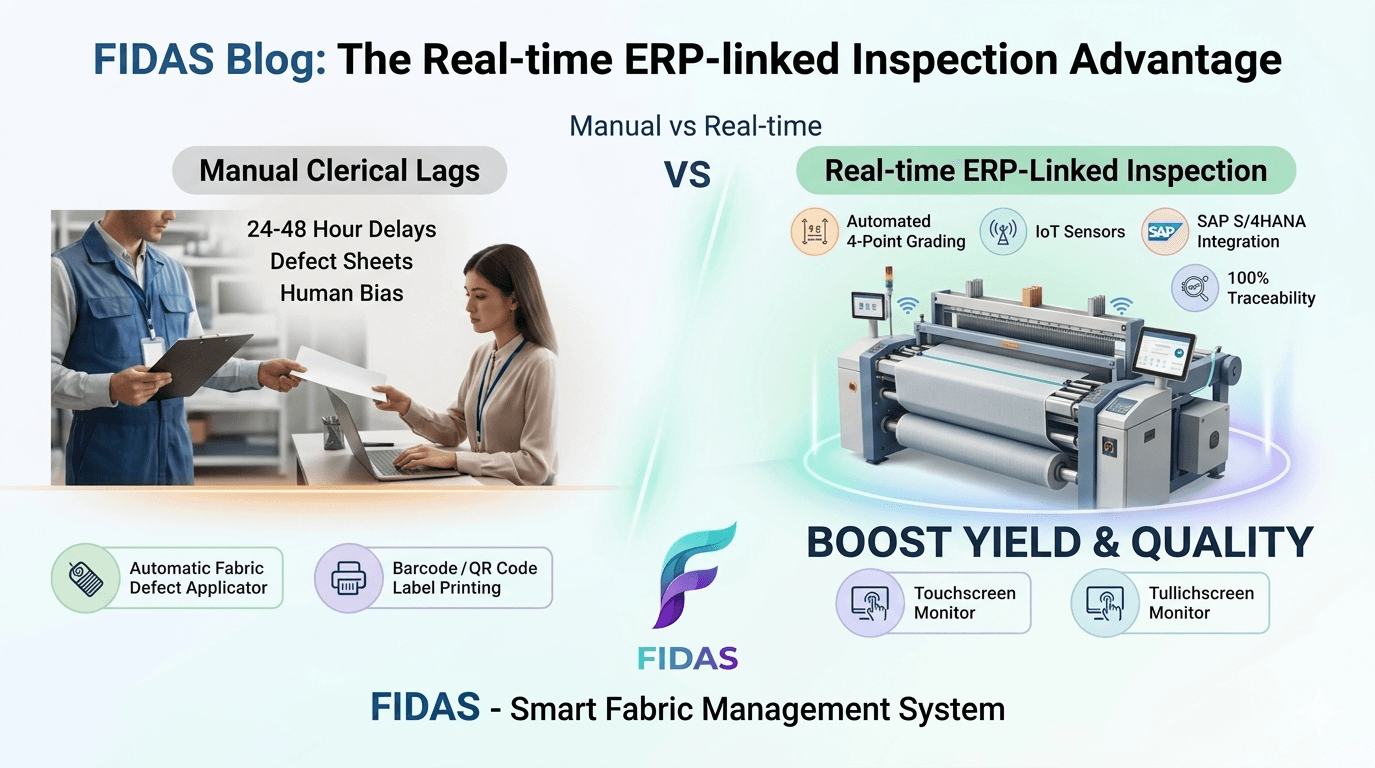
For decades, manual fabric inspection has been the backbone of the industry. It relies on the keen eyes of experienced inspectors to spot flaws. These manual middlemen are the biggest killer of productivity in a mill. Traditionally, an inspector notes down a defect in a clipboard and hands it over to a clerk who types it into a defect sheet by the end of the day.
This creates clerical lag, which refers to errors in data entries or documentation processes which cause a delay in final processing. These lags cause a 24-48 hour delay between an inspection and the data reaching the manager’s desk and by the time these errors are rectified, it is already too late and there is already a manufacturing loss incurred. To compete in 2026, Automatic fabric inspection and real time quality monitoring system is much needed.
Meeting global standards through digital traceability
To aim for automotive fabric inspection standards, we need 100% digital traceability and adhere to fabric inspection standards such as using the 4-point system
Buyers now demand "Source-to-Ship" proof. This means every defect must be tied to a specific machine, shift, and yarn batch. When your inspection is linked to your ERP, we don't need to dig through paper files to answer a customer claim. We can find the digital record in seconds, identifying the root cause and rectify the error
Why ERP integration is the standard
To ensure maximum efficiency, we need the connection between the digital fabric grading system and SAP S/4 hana fabric inspection module.
- When the roll length and weight are updated instantly via IoT sensors, the stock levels are always 100% accurate.
- Since every roll is barcoded and recognised by the system as soon as it leaves the fabric inspection table , it ensures that the right fabric reaches the client.
- There is no human bias as the software calculates the ATSM 4-point grade automatically and the ERP locks it in ensuring quality standards in fabric inspection.
Thus to truly compete, you need a system that offers real-time fabric defect detection and direct integration with your ERP, such as SAP S/4HANA.
The FIDAS Edge: The Ultimate Partner in Fabric Inspection
At FIDAS, we specialize in the high-end textile ERP integration solutions that make this standard vision a reality. As the industry leader in textile quality control, FIDAS transforms your existing tables into high-tech workstations. The system provides:
- Precision Measurement: From Digital Fabric Length Measurement Counters to Online Digital Fabric Width Measurement, FIDAS removes human error from the most basic physical checks.
- Advanced Traceability: FIDAS Utilizes Barcode/QR Code Label Printing and Heat Seal Barcoded Labels, and ensures 100% fabric traceability from the loom to the final customer.
- Quality Assurance IoT: FIDAS system includes Automatic Weight Capturing for GSM Verification, Real-time Color Verification Devices, and USB-based EPI/PPI measurement to ensure products meet the strictest fabric inspection standards.
- Industrial Reliability: In FIDAS, Every system is powered by an Industrial Grade Fanless PC and an intuitive Touchscreen Monitor, built specifically to handle the rugged environment of a textile mill.
Conclusion
As quality standards and demand increases, proper textile quality control is required to compete. The unnecessary costs in manual fabric inspection are not minor inconveniences anymore, and they need a real solution.
Proper fabric inspection requires an integrated ecosystem of automotive fabric quality control, with real-time data of IoT measurements and ERP-linked software to work in perfect harmony.
With FIDAS smart fabric management system, manual errors are eradicated and automated fabric inspection machines ensure 100% traceability and maximize fabric yield. Employing elite fabric inspection standards, FIDAS provides the digital innovation that the textile industry needs.